VITALI BERGAMO
PORTA SUD award:
HYBRID RETAIL SPACE
[PROJECT INFO]
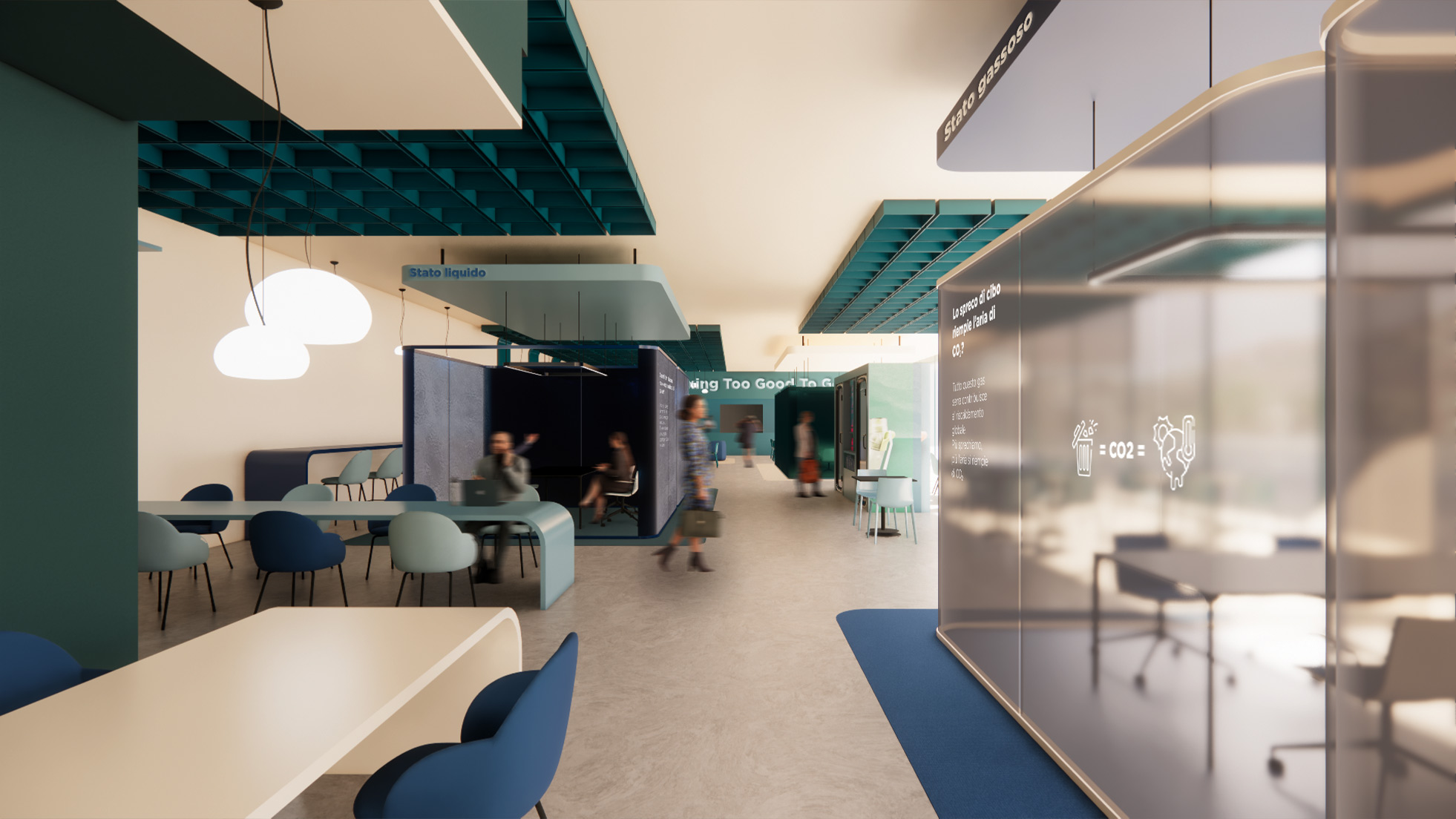
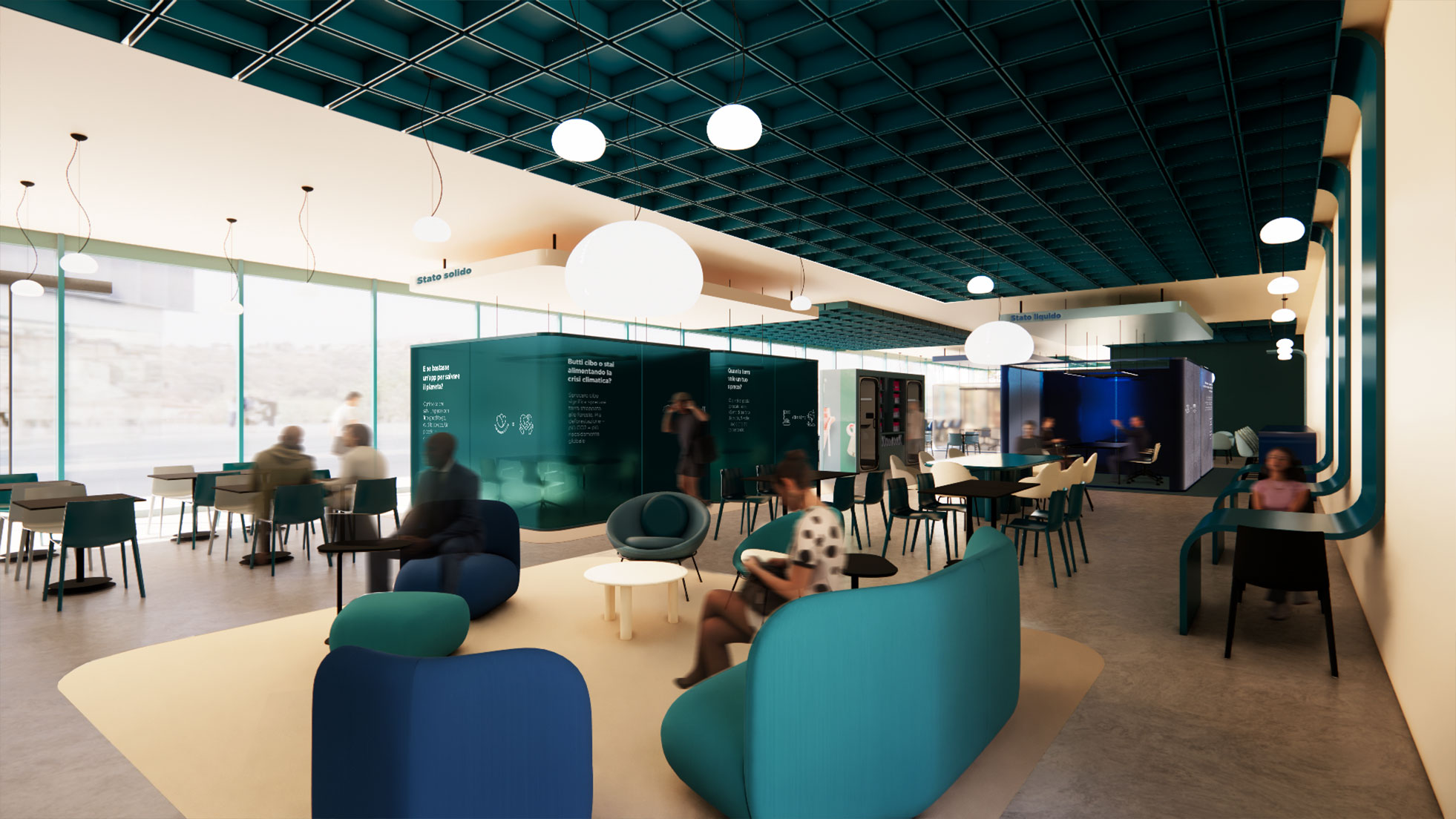
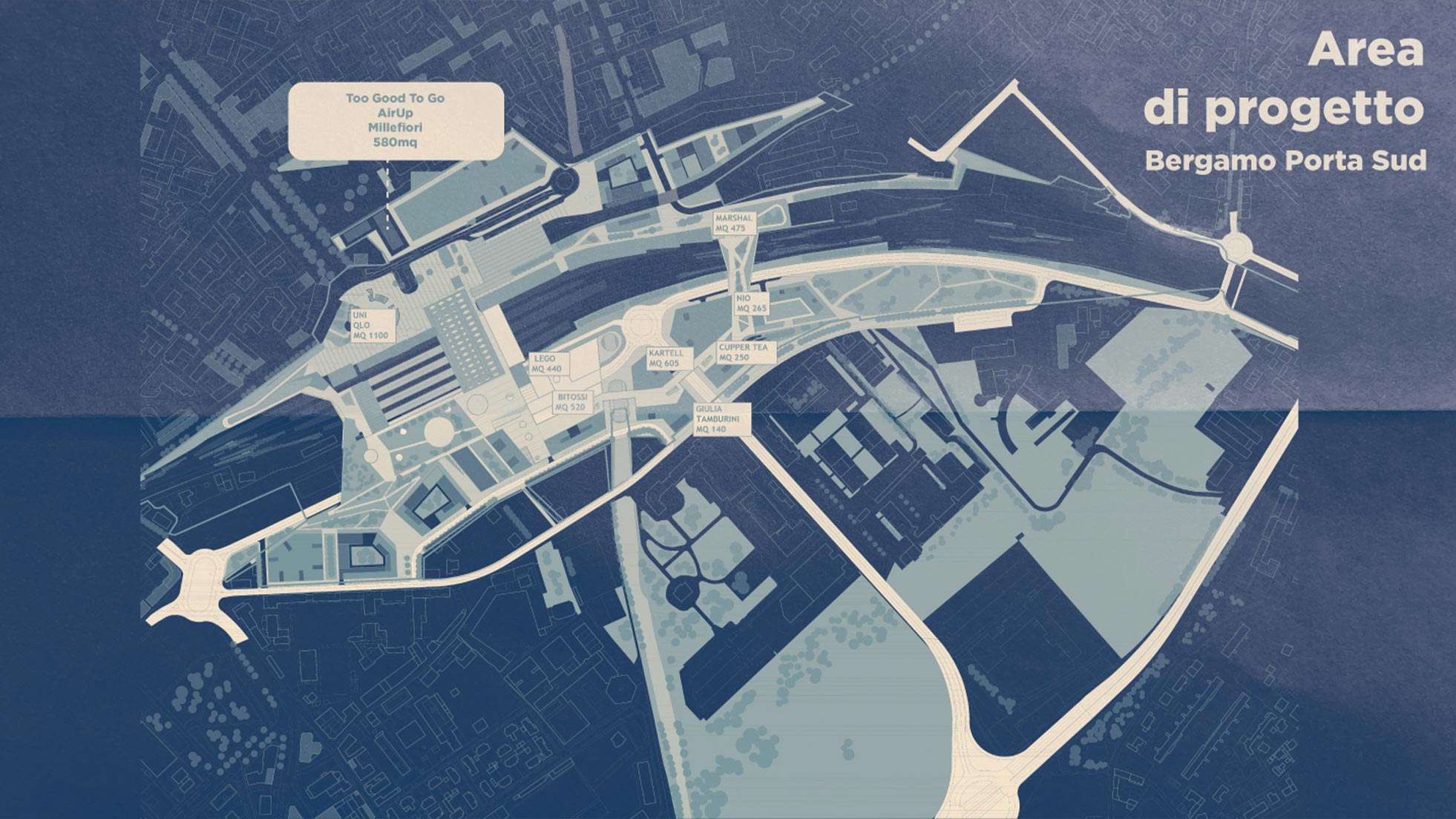
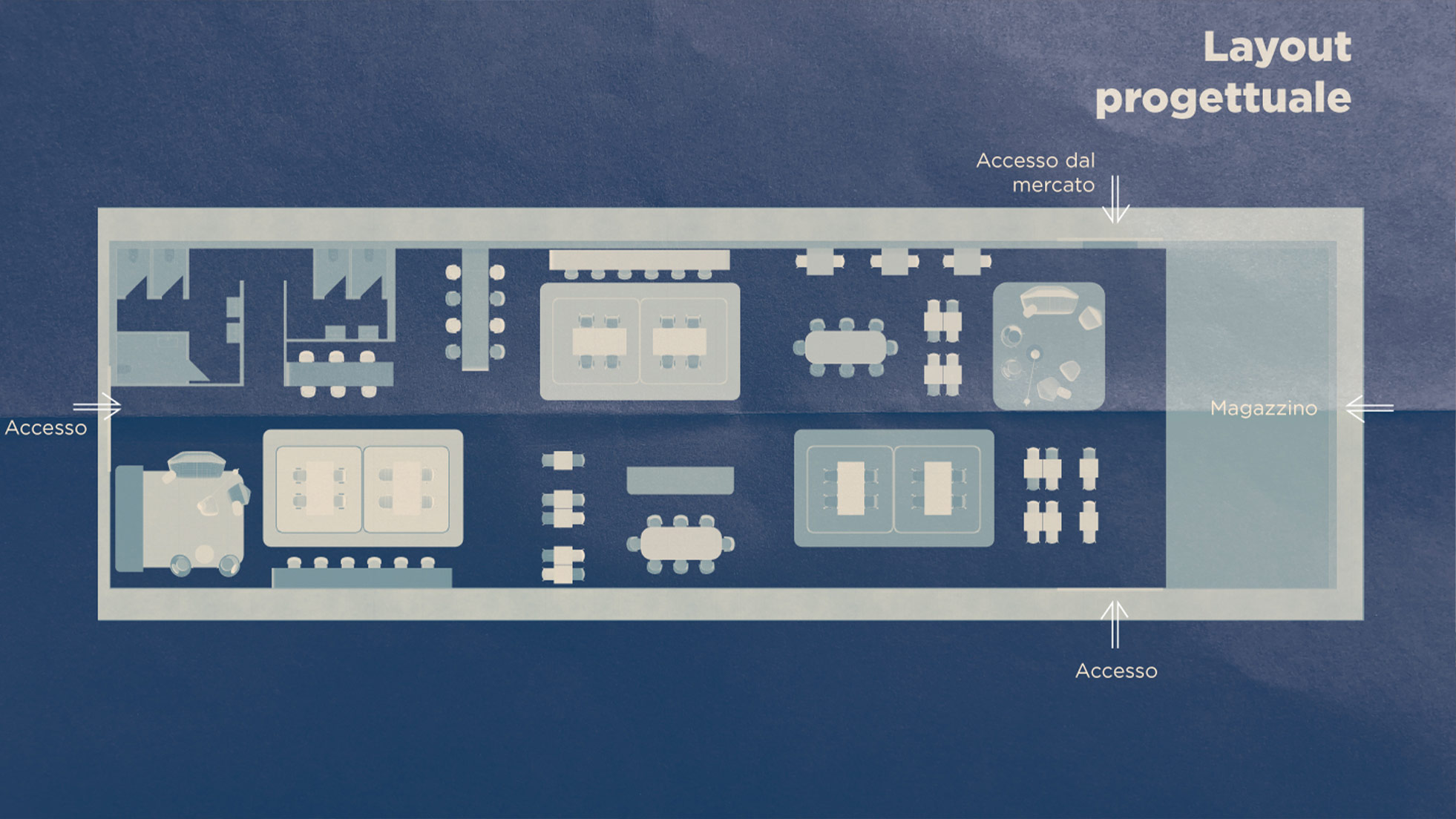
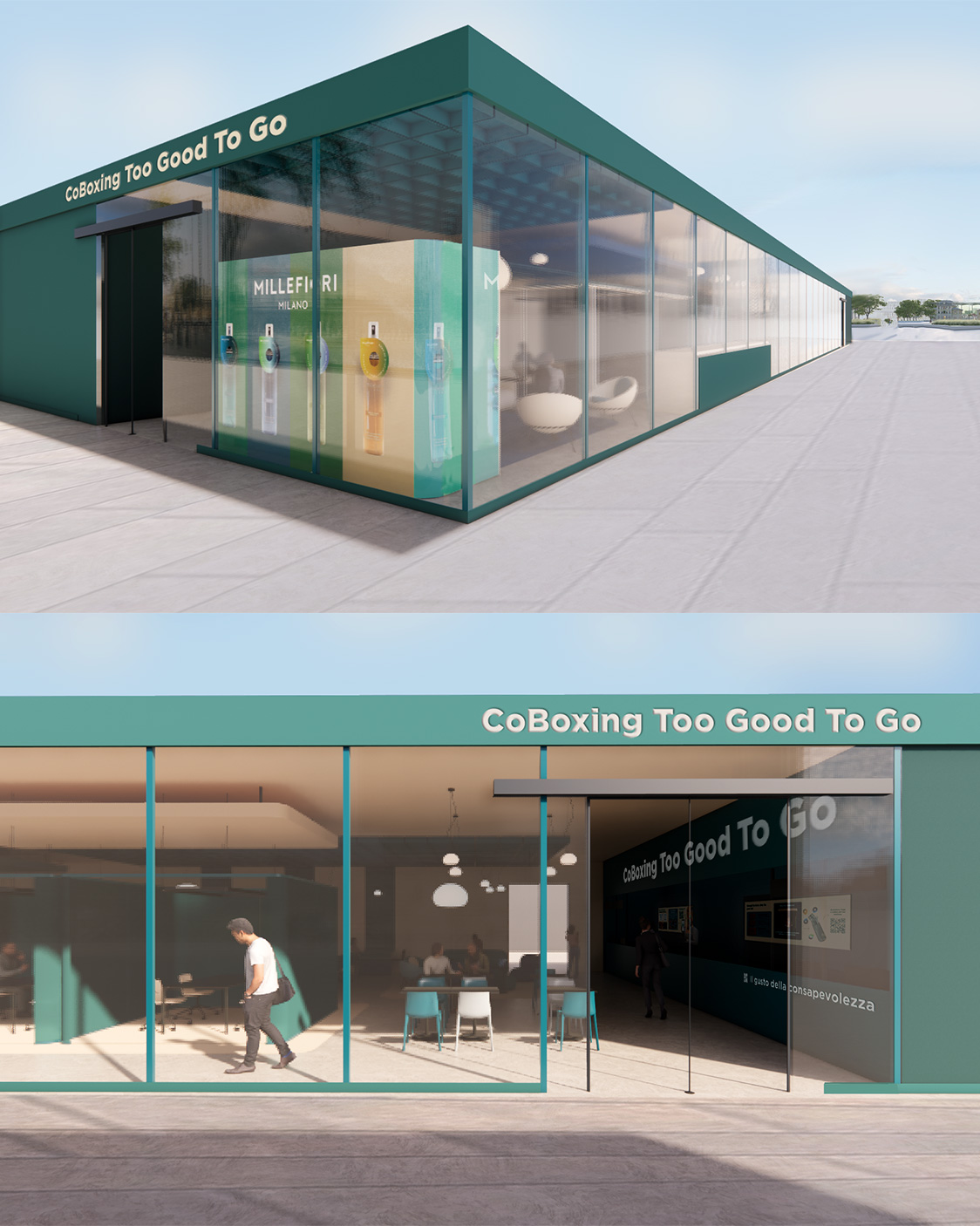
CoBoxing is a hybrid retail and social concept developed within the redevelopment plan of Bergamo Porta Sud station. The project transforms a 580 sqm space adjacent to the covered market into a fluid environment combining retail, coworking, and food service.
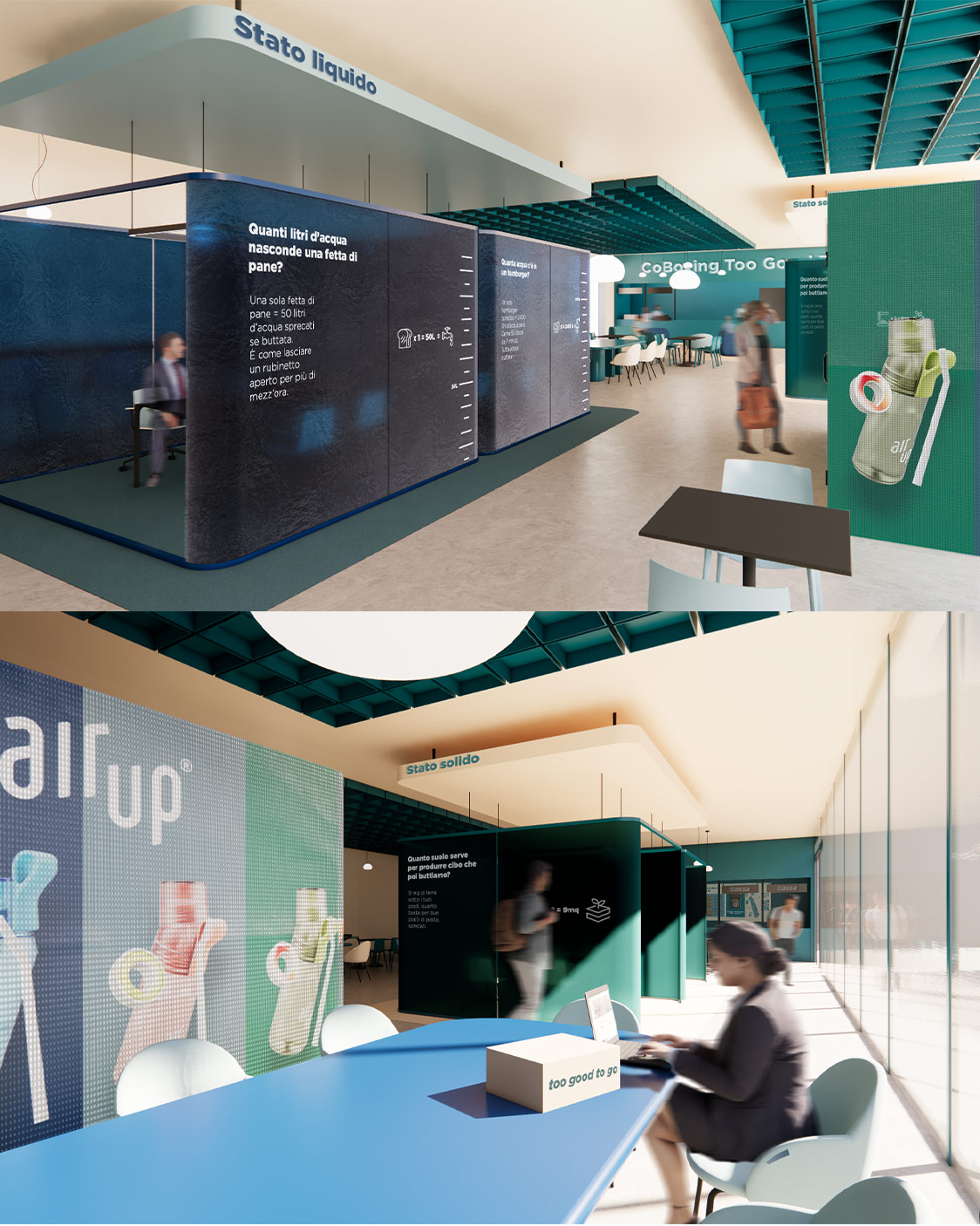
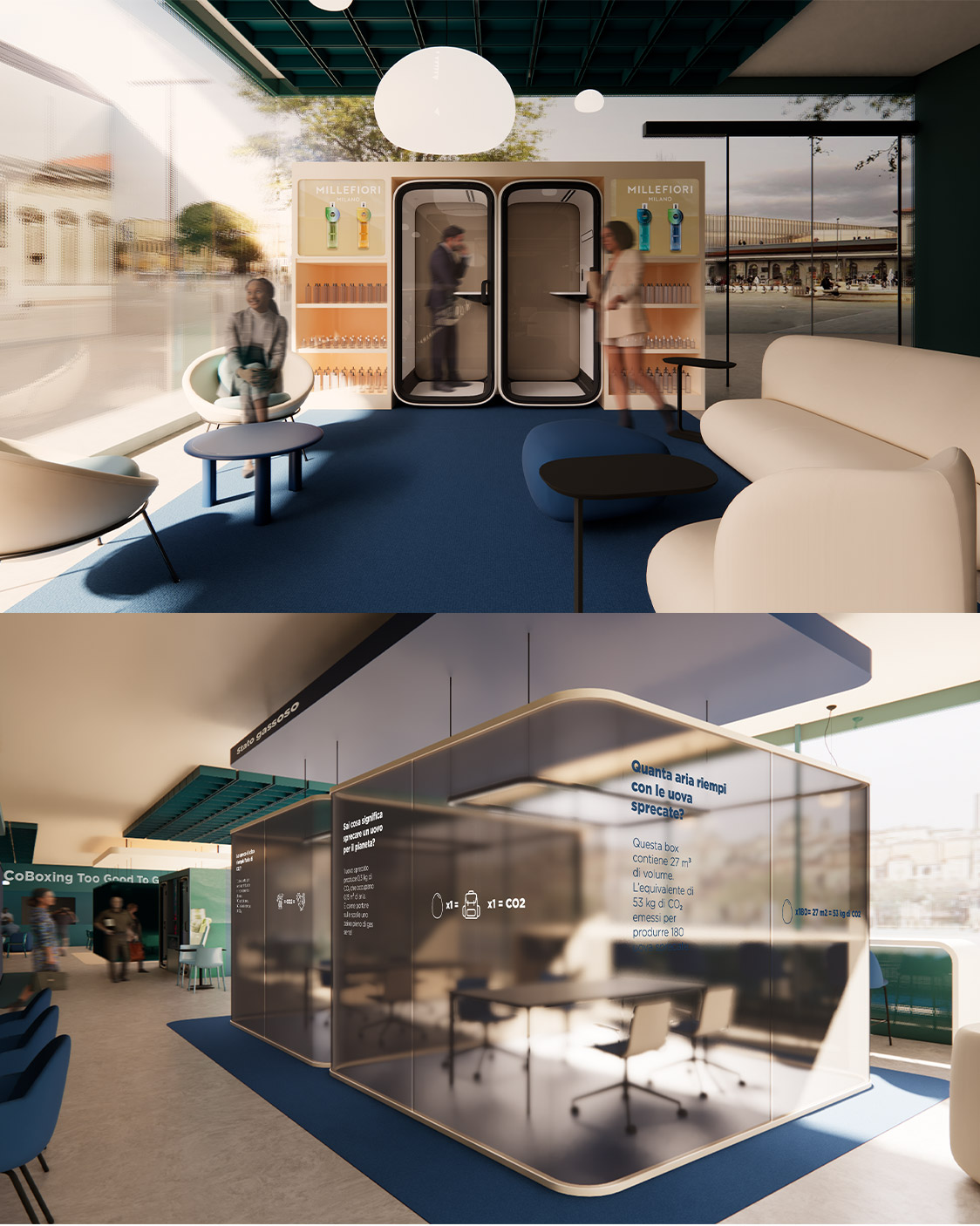
It brings together three brands—Too Good To Go, AirUp, and Millefiori—around the essential gestures of eating, drinking, and breathing.
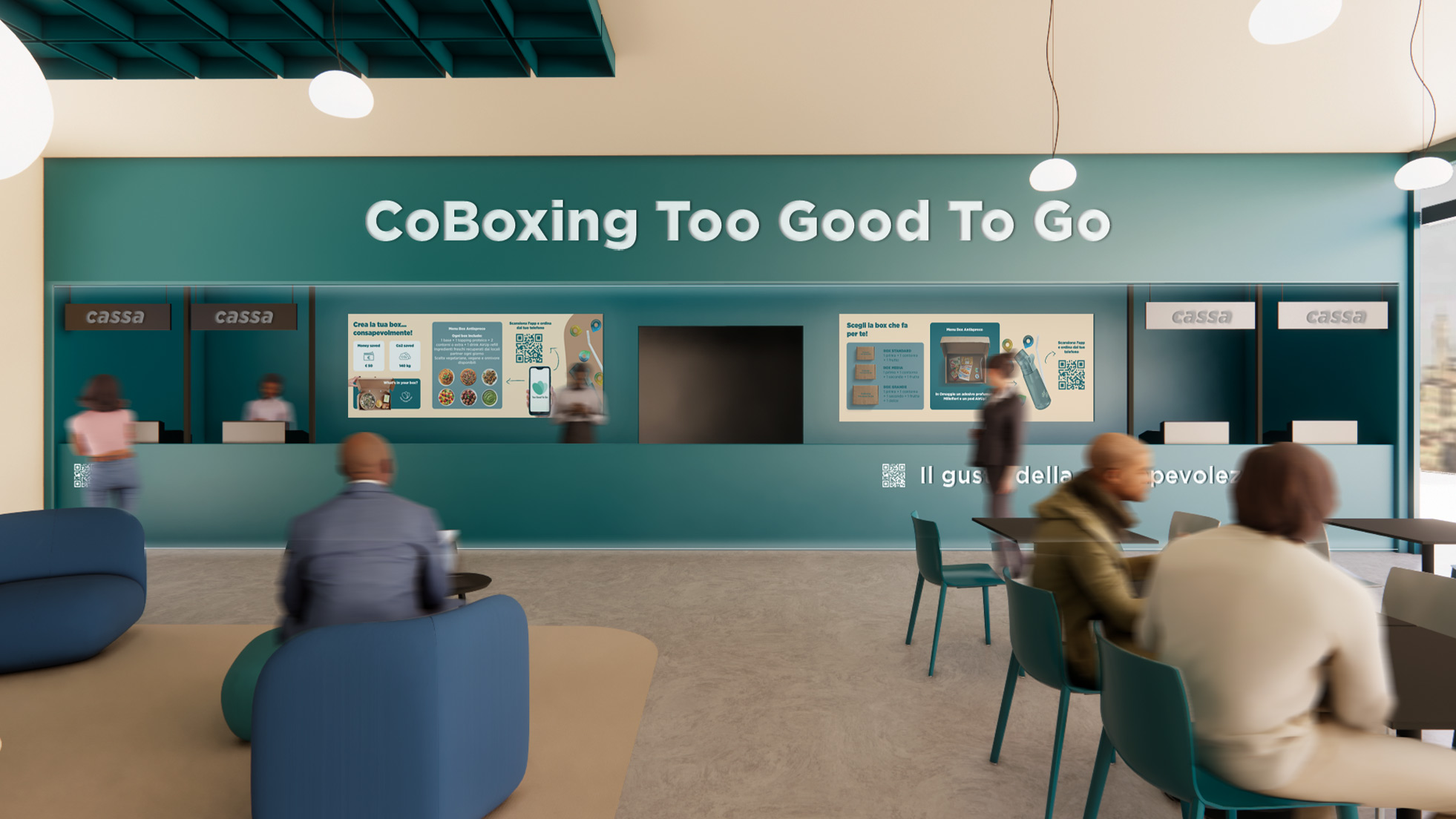
The experience promotes conscious consumption through users’ active participation in composing personalized boxes starting from Too Good To Go products. These are enriched by AirUp and Millefiori elements, designed to encourage users to explore the respective brand corners and engage with the products.
The spatial concept is structured through the metaphor of the three states of matter—solid, liquid, gas—translating food waste impacts into land use, water consumption, and CO₂ emissions, communicated through integrated infographics.
A metaphysical aesthetic of pure geometries, essential materials, and calibrated lighting suspends the space from its everyday context to emphasize its conceptual reading.
CoBoxing becomes an immersive environment where design, sustainability, and awareness converge.